
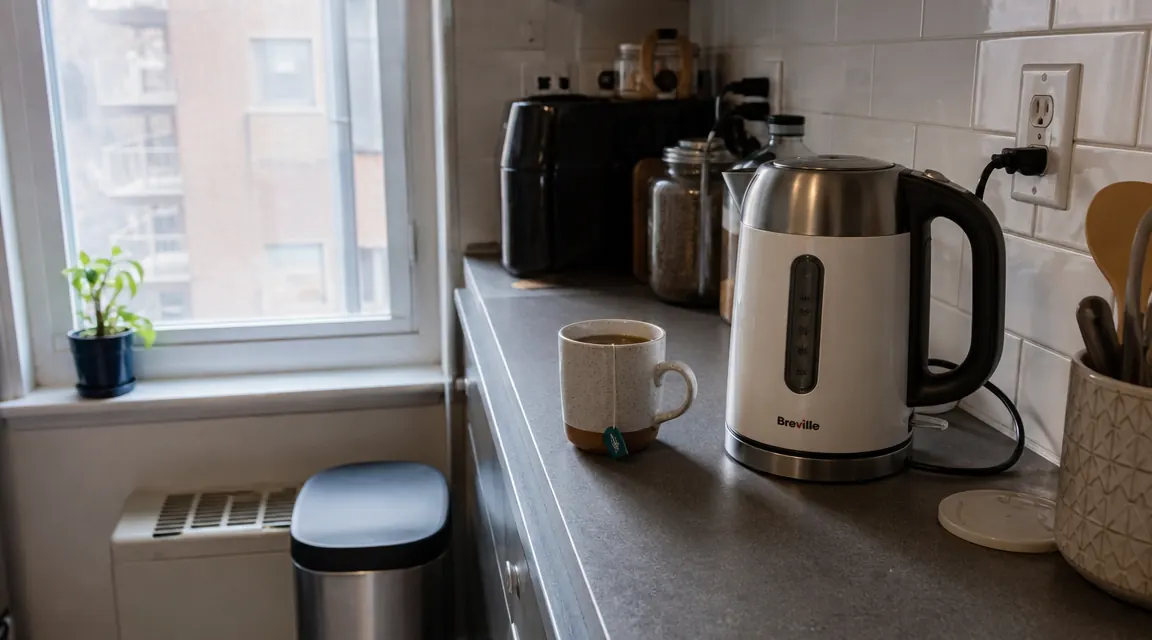
My neighbor Patrice texted me three weeks after she bought the AZEUS electric kettle. Not to say she loved it. Not to say there was a problem. She texted to ask why the bottom of the kettle looked orange. That is a perfectly reasonable question, and the answer is not in the manual. I had that same orange ring after about six weeks, and I spent ten minutes convinced something was wrong before I figured out what was actually happening. That is the kind of thing nobody puts in a review, and it is exactly the kind of thing I want to walk through here.
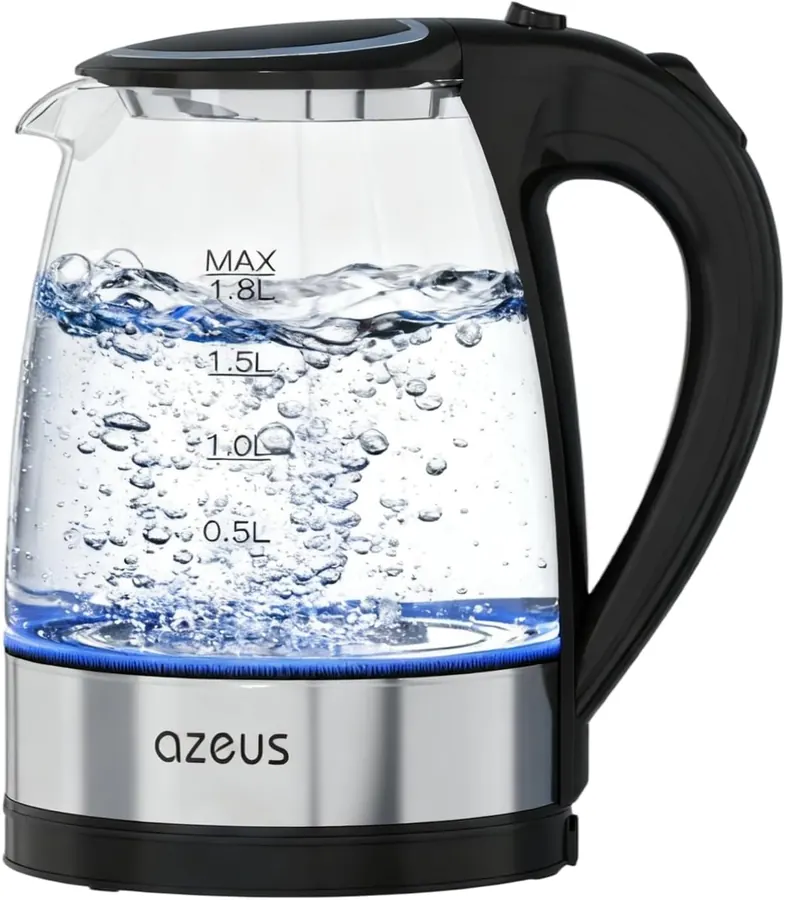
The AZEUS 1500W 1.8L kettle costs around twenty-two dollars. For that price, it boils water fast, shuts off automatically, and fits on a small kitchen counter without complaint. I covered the long-term performance arc in a separate piece. This article is different. This one is the stuff you learn after you have owned it for a while, the surprises nobody warned you about. Some of them are annoying. One of them could actually burn you if you are not paying attention. All of them are manageable once you know what to expect.
The Quick Verdict
A genuinely capable kettle at a price that makes the minor quirks forgivable, as long as you go in with eyes open.
Amazon Check Today's Price →If you already know you want it, here is where to check today's price
The AZEUS 1500W kettle regularly sits under twenty-five dollars on Amazon. Stock moves, but this one has stayed consistently available and usually ships fast.
Amazon Check Today's Price on Amazon →The Stainless Interior Will Stain, and That Is Normal
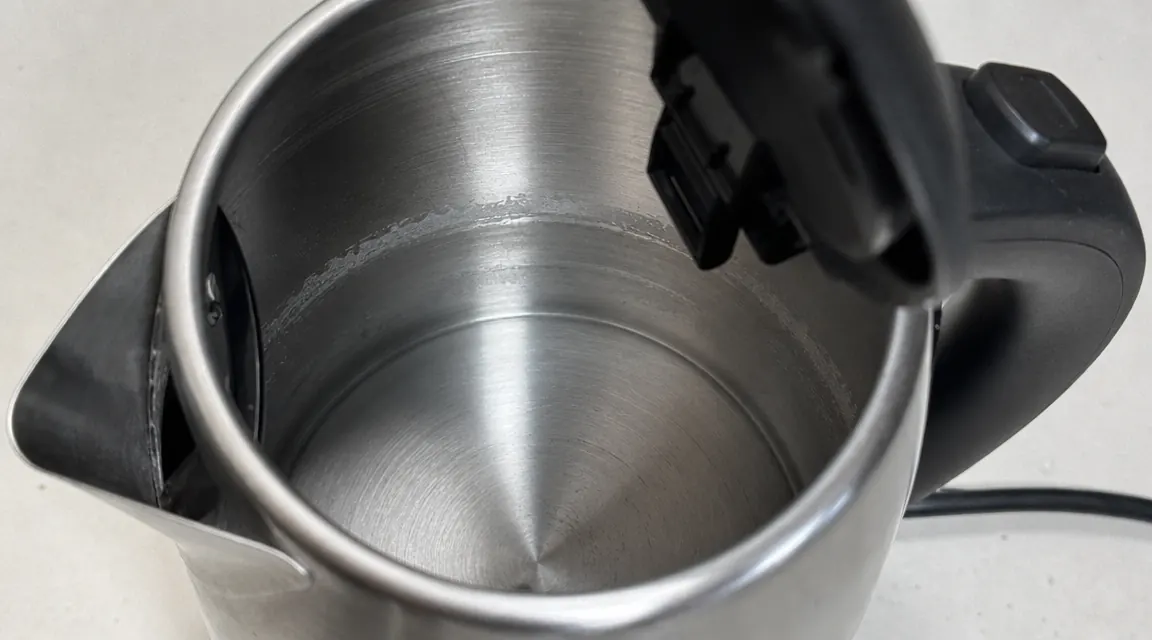
That orange or tan ring Patrice noticed is mineral residue from tap water. It collects right at the waterline and bakes on a little with every boil. In hard water areas like mine, you can see a faint ring forming within a month. In softer water areas, it might take three months or longer. The staining is purely cosmetic and does not affect the taste of your water or the safety of the kettle. But if you are the kind of person who needs their appliances to look showroom-clean, this will bother you.
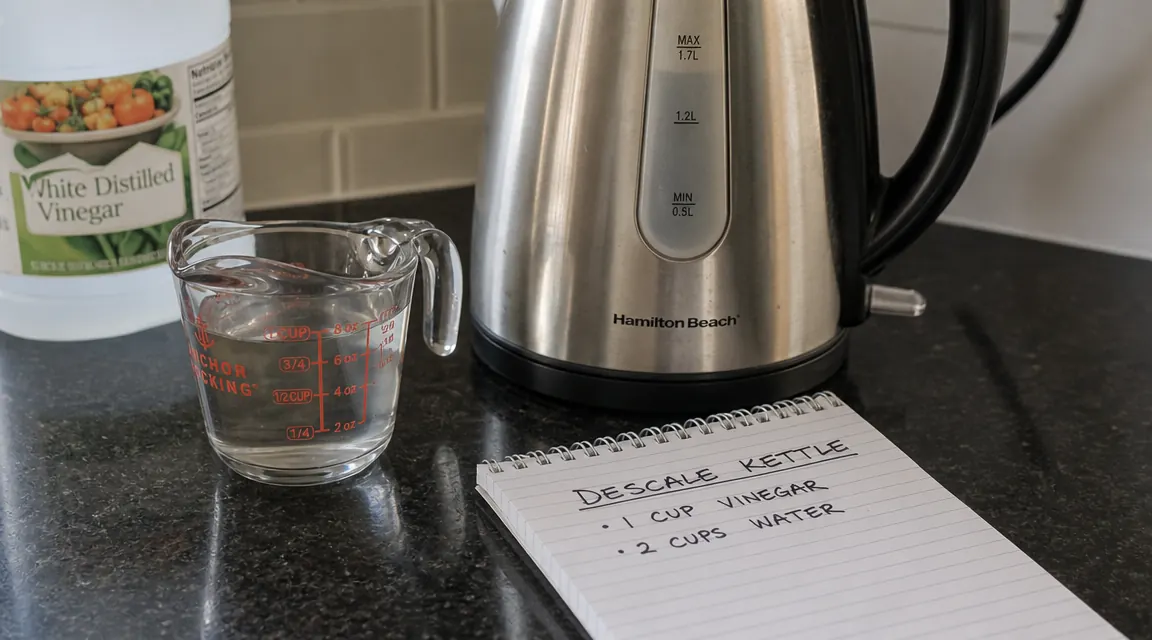
The AZEUS interior is a brushed stainless steel, which is a reasonable choice at this price, but it is not the polished interior you get on a fifty-dollar Cuisinart. Brushed steel holds mineral deposits more visibly than polished steel does. The fix is straightforward: fill the kettle halfway with equal parts white vinegar and water, boil it, let it sit for twenty minutes, pour it out, and rinse twice. The ring disappears almost completely. I do this every six to eight weeks in summer, less in winter when I use the kettle less. Takes less than thirty minutes total including wait time.
The orange ring is mineral deposits, not rust. Vinegar and twenty minutes of patience clears it right up.
The Base Contact Has to Seat Correctly, or the Kettle Will Not Boil
This is the thing that tripped me up in the first week. The AZEUS kettle uses a 360-degree rotating base, which means you can set the kettle down in any direction and it should make contact with the heating element. In practice, there is a specific gentle downward press you need to apply when you set it down. If you just place it lightly on the base, you can get into a situation where the kettle looks seated but has not fully connected. You press the button, the indicator light comes on briefly, and then nothing happens. Or it boils halfway and cuts out.
The fix is to push down slightly as you set it on the base, the same way you press a lamp plug fully into an outlet rather than just resting it there. Once you have the habit, it takes zero extra thought. But for the first two weeks I was occasionally picking it up, wiping the base contacts with a dry cloth, and trying again before I realized the connection was the issue, not the contacts being dirty. Just seat it with intention and you will never deal with this.
The Boil-Dry Shutoff Is Real, but Do Not Test It on Purpose
The AZEUS has an advertised boil-dry protection feature. It will shut off automatically if you accidentally turn it on with no water inside, or if somehow all the water boils away before the auto shutoff catches it. I accidentally triggered this once when I thought I had filled it but had actually just rinsed it and left very little water inside. The kettle ran for about forty seconds, got very hot, and shut itself off. It worked exactly as advertised.
What I want to flag is that the kettle needs a few minutes to cool down after a boil-dry event before it will boil normally again. There is a thermal cutoff inside that trips when the heating plate gets too hot without water to absorb the heat. If you try to immediately refill and reboil, it will just sit there and not boil. Give it five minutes. It resets itself and works fine after that. This is not a defect, it is a safety design. But if you are in a hurry and suddenly the kettle seems dead, check whether a boil-dry event happened before assuming something is broken.
The Indicator Light Is Bright Enough to See Across a Dark Kitchen
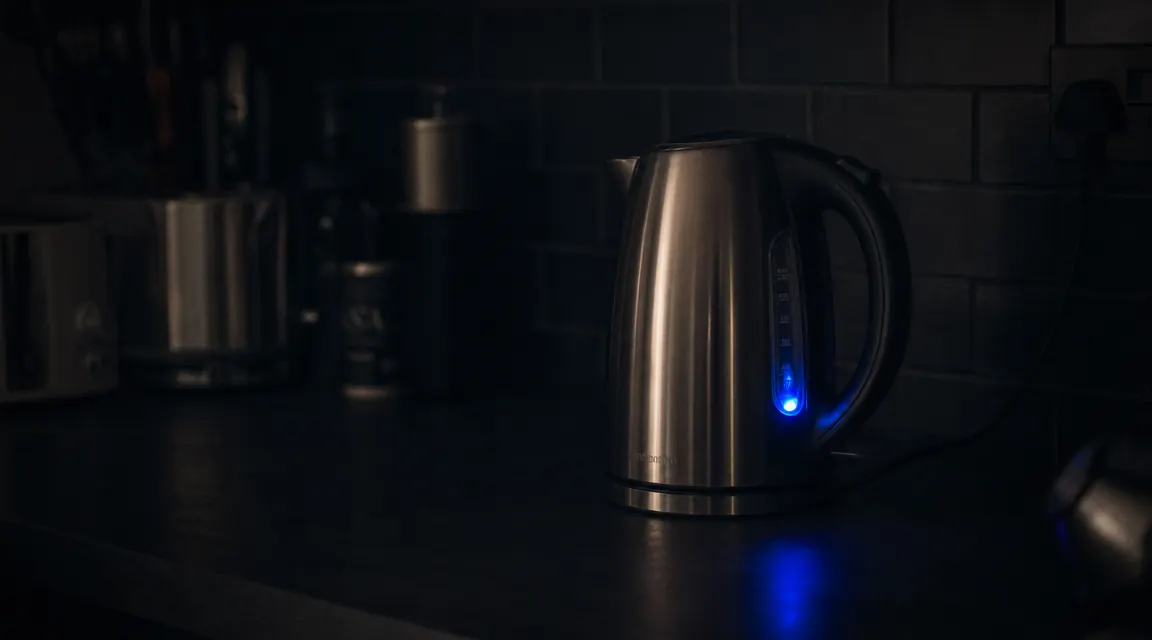
I make tea at odd hours. Early morning before five, sometimes late at night when I cannot sleep. The AZEUS indicator light is a cool blue and it is genuinely bright. Not blinding, but noticeable from across a small kitchen in low light. That is useful because you can see at a glance whether the kettle is still heating or has finished. I actually appreciate this feature during the day. At night, if your kitchen is open to your living space or bedroom, it does put out enough glow to be mildly noticeable if you are sensitive to light.
There is no brightness adjustment and no way to turn off the light independently. When the kettle is boiling, the light is on. When it has finished and switched off, the light goes out. That is the whole system. For most people in most kitchens this is a non-issue. I mention it because I had one reader write to me after a review asking why her kettle kept waking her dog, and it turned out the dog had a line of sight to the kitchen counter from the hallway. Worth knowing if you have a light-sensitive pet or a partner who sleeps nearby.
The Handle Gets Warm Near the Lid When Steam Is Venting
This is the one I want you to pay attention to. The AZEUS handle is plastic, and most of it stays cool during a boil. The area near the base of the handle, down where the kettle body meets the handle join, is fine. But the section of the handle right below where the lid meets the body can get noticeably warm during an active boil, because steam vents from the lid area and rolls along the underside of the lid toward the handle join. This is not unique to AZEUS. It happens with many kettles at this price point. But the first time you feel unexpected warmth on what you thought was a cool handle, it can startle you.
My approach: I grip the handle in the middle or lower section, not right up near the lid. I also do not pour with my face directly over the kettle, because the steam from a just-finished boil comes out fast and hot when you tilt the spout. Tilt away from your body, hold the handle lower, and you will not have a problem. The kettle is not unsafe. I just think it is better to know this going in rather than experience a surprise steam puff on your first pour.
What I Liked
- Boils 1.8 liters in under five minutes, meaningfully faster than stovetop
- Auto shutoff works reliably and does not require any setup
- Boil-dry protection actually trips and resets correctly
- 360-degree base means you can set it down facing any direction
- Blue indicator light makes it easy to confirm the kettle is running or finished
- Compact footprint earns its counter space in a small kitchen
- Mineral staining cleans up quickly with a basic vinegar descale
Where It Falls Short
- Brushed stainless interior shows mineral ring deposits faster than polished alternatives
- Base seating requires deliberate downward press to guarantee full contact
- Handle area near the lid gets warm during active boil from steam venting
- Indicator light is bright enough to be noticeable in a dark open-plan space
- No temperature control, just full boil, which is fine for tea but limits use for delicate green teas
How Often You Actually Need to Descale This Kettle
Most people descale less often than they should and more often than they need to. The mineral ring I described earlier is cosmetic and does not affect performance until it gets thick enough to partially insulate the heating element, which takes a long time. What actually affects performance is a heavy buildup of limescale on the heating plate at the bottom of the kettle. That white, chalky, sometimes flaky crust is what slows boil time and can eventually shorten element life.
In hard water areas (most of the Midwest and Southwest), I would descale every six to eight weeks. In soft water areas, every three to four months is more than enough. You will know you are overdue when boil time starts creeping up noticeably or you see white flakes in the water after boiling. The vinegar method I described earlier handles the sidewall ring. For bottom plate buildup, fill with straight white vinegar to just cover the plate, boil, let sit for thirty minutes, then rinse three times. The last rinse matters, you do not want residual vinegar in your tea.
Who This Kettle Is Actually For
The AZEUS 1500W is the right kettle for someone who wants fast boiling water, does not need temperature control, and does not want to spend premium money to get a brand name on the base. It is genuinely well-suited to apartments and small kitchens because it is compact, light, and the cord tucks neatly under the base when stored. If you make black tea, herbal tea, instant coffee, instant oatmeal, or ramen regularly, this kettle will serve you every single morning without complaint. I have used it for over ten months and I still reach for it first, even when I am testing other appliances.
If you make green tea or white tea where water temperature matters, the AZEUS is not the right tool. You will need a variable temperature kettle for that, and they cost more. If you want a kettle that stays interior-showroom-clean without any maintenance, a polished stainless interior or a glass kettle will serve you better. And if you share a kitchen with a very light sleeper and the blue indicator light is in their sightline, know that going in. These are not dealbreakers for most people. They are just the honest picture.
Who Should Skip It
Skip this kettle if you are a green tea or oolong drinker who needs precise temperatures. Skip it if cosmetic staining on appliances genuinely bothers you and you do not want to do a monthly vinegar rinse. Skip it if you frequently boil water while distracted and have a habit of forgetting to fully seat things on their bases. A kettle with a locking base connection would suit you better. For everyone else, the AZEUS is doing a lot for twenty-two dollars and change.
Ready to see what twenty-two dollars actually buys you? Check the current price.
The AZEUS kettle regularly ships within a day or two on Amazon. If you have been making do with a stovetop pot, you will notice the difference on your first morning with this one.
Amazon Check Today's Price on Amazon →