
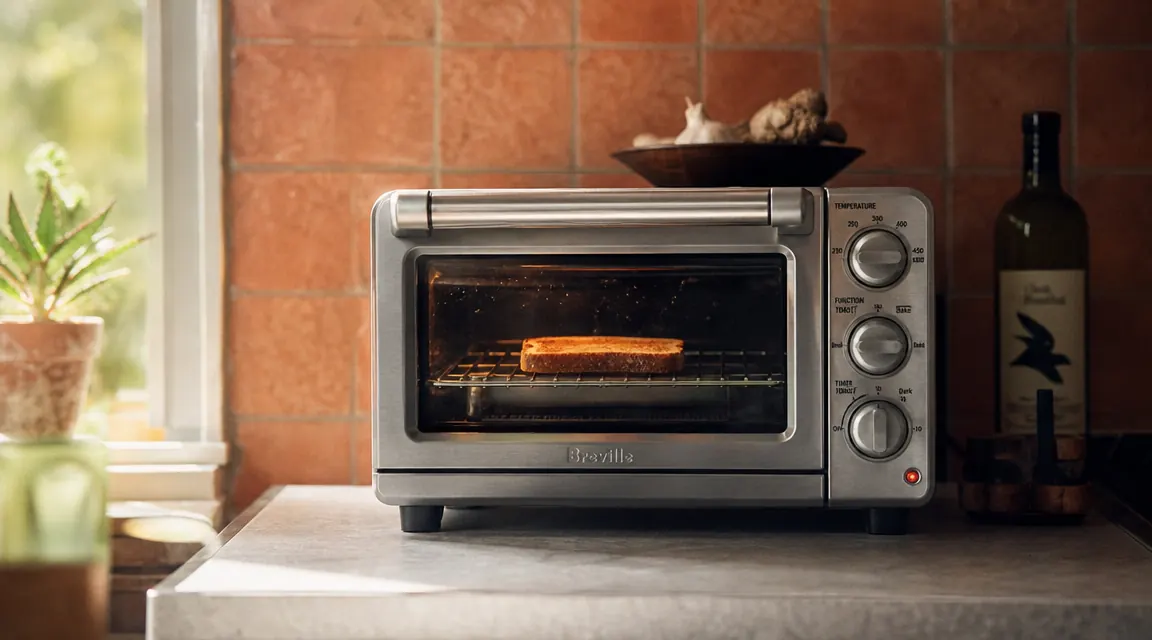
My kitchen counter measures eighteen usable inches. I know because I have paced it off with a tape measure more than once, trying to figure out what gets to stay and what goes back in a cabinet. When the BLACK+DECKER TO1760SS toaster oven arrived fourteen months ago, I was skeptical it would last past a season. I had owned two cheap toaster ovens before it, and both gave up within eight months. One warped its baking rack. One stopped maintaining temperature at anything above 400 degrees. I expected more of the same.
I was wrong. The TO1760SS is still on my counter today, and I have used it somewhere between five and seven days a week for that entire stretch. I am not here to tell you it is perfect, because it is not. But for a 4-slice toaster oven at this price, it has earned its spot in a way the previous two never did.
The Quick Verdict
A reliable, space-smart toaster oven that handles everyday cooking tasks well, with consistent heat once you learn the rear-element hot spot and give it five minutes to preheat.
Amazon Check Today's Price →Still shopping? The TO1760SS is worth checking while the price is where it is.
This is the oven Sandra has used daily for fourteen months. The current price on Amazon is typically well in the budget range, which puts it in a different category from the boutique brands for the same core performance.
Amazon Check Today's Price on Amazon →How I Have Used It
I live in a 620-square-foot apartment in Cincinnati. The kitchen is a galley layout with one wall of counter and a four-burner range that I use mainly for stovetop cooking. My full-size oven works, but heating it for a single chicken breast or a pan of roasted broccoli has always felt like overkill, both in time and in the way it warms up the whole apartment.
Most days I use the toaster oven for one of three things: toast in the morning (two slices of sourdough, shade 4), reheating leftovers at lunch, and roasting a small pan of vegetables or protein at dinner. On weekends I bake more. I have done biscuits, brownies in a quarter-sheet pan, roasted chicken thighs, and more than a few batches of granola. The oven has handled all of it without complaint, though not always without a little finesse on my part.
I also want to note that I did not baby this oven. I forgot to put foil under a chicken thigh once and had to scrub the crumb tray thoroughly. I left it running for toast while I answered the door more than once. I used the bake setting at 425 degrees for roasted potatoes at least forty times. It has held up to all of that.
Heat Consistency: Better Than Expected, But Not Perfect
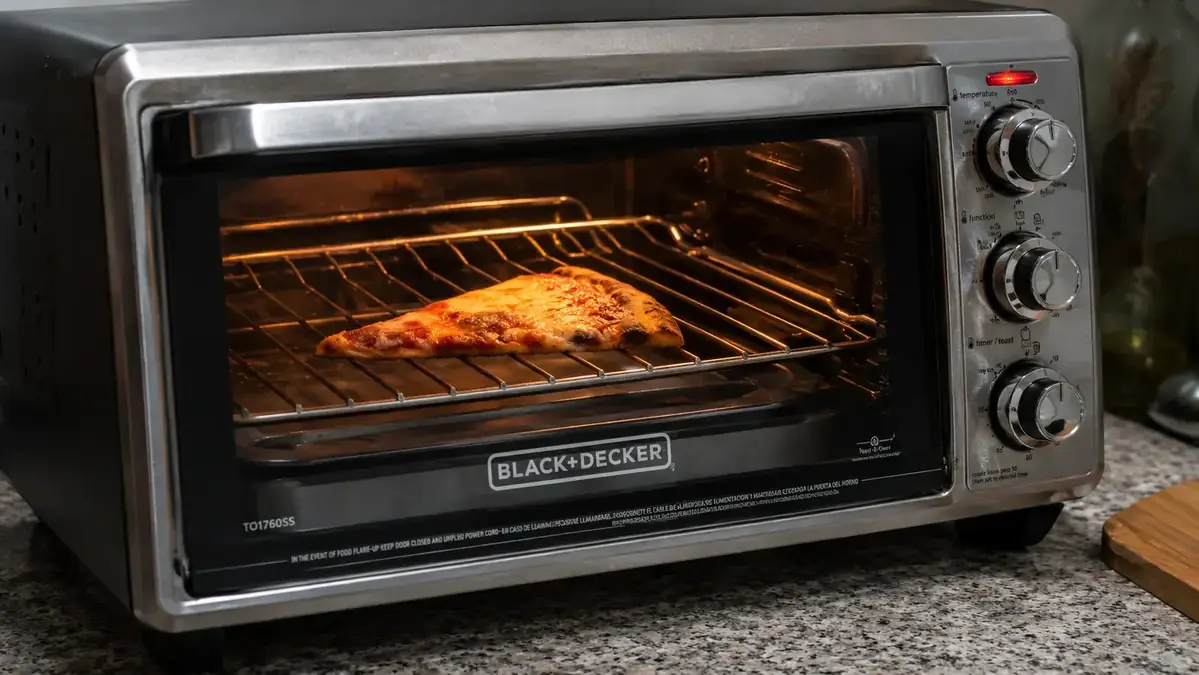
The TO1760SS has a 1500-watt dual-element design, meaning it heats from both top and bottom. The natural convection feature, which BLACK+DECKER describes as using the rear element and a specific vent design to circulate air, is not a powered fan convection like you find in commercial ovens. It is a more passive process. That said, I noticed a real improvement in baking evenness compared to my old single-element toaster oven once I figured out how to use it correctly.
The hot spot is in the rear right corner, near the back element. If you are making toast, the rear slices will brown faster than the front slices, particularly on the right side. My fix has been to rotate the rack once halfway through a bake on anything that matters. For toast, I simply accepted that the rear slice comes out a shade darker and plan accordingly. It took me about a week to calibrate my expectations, and after that the hot spot became a non-issue in daily use.
Temperature accuracy is good, not laboratory-grade. I use a cheap oven thermometer occasionally, and the TO1760SS tends to run about fifteen to twenty degrees hotter than the dial setting at the center rack position. I have compensated by setting my baking temperatures fifteen degrees lower than a recipe calls for and checking five minutes early. Once I built that habit, my results improved noticeably. Biscuits come out even. Granola does not burn at the edges.
The hot spot is real. But once I started rotating the rack halfway through and setting the temperature fifteen degrees lower than the recipe, my results matched what I got from my full-size oven on most dishes.
Toast Performance: Solid After You Find Your Setting
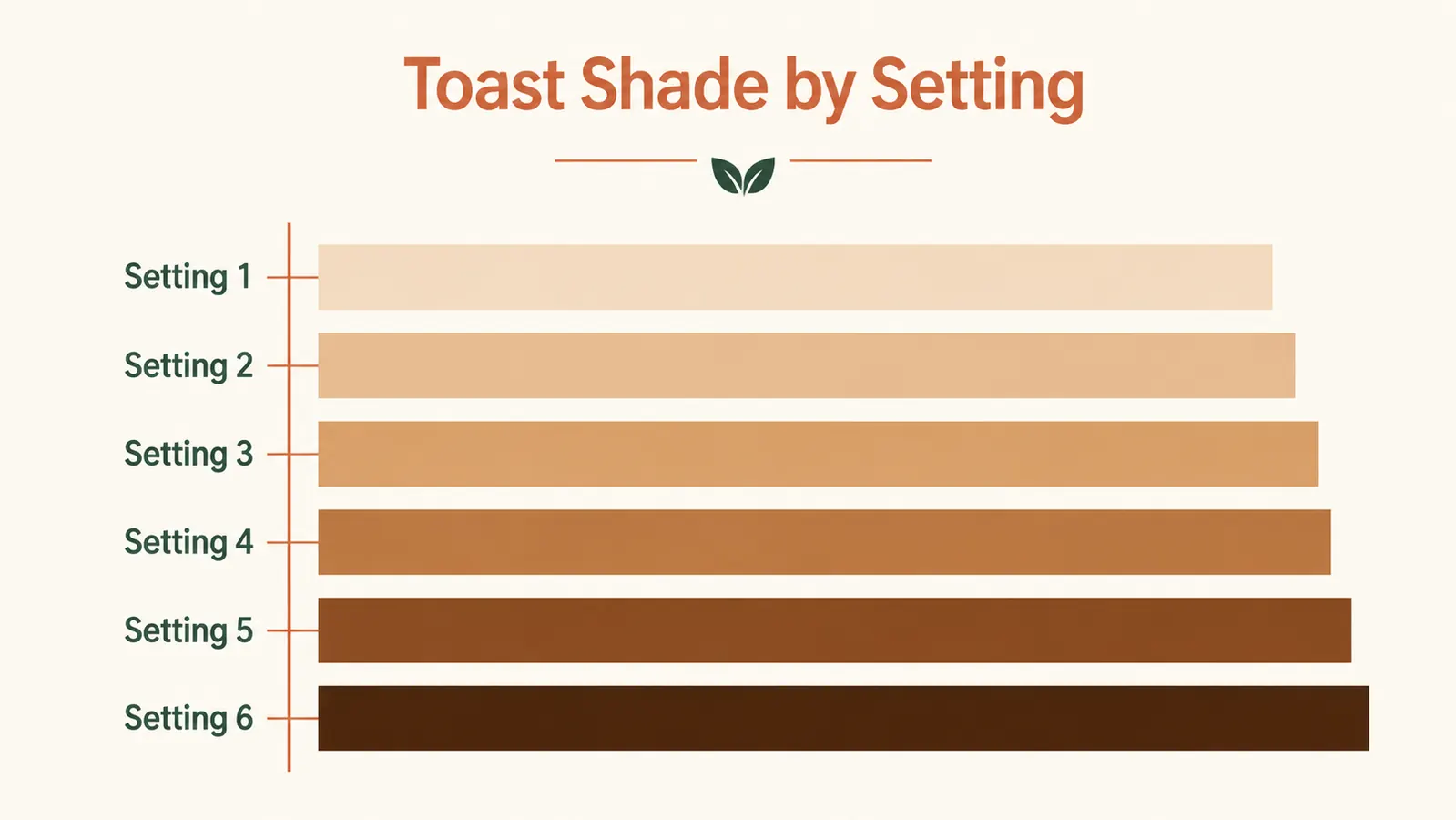
Toast is probably the most common thing I use this oven for, so it matters. The shade dial goes from 1 to 6. Setting 1 barely warms the bread. Setting 6 will produce something close to char. My sourdough lands exactly where I want it at setting 4. My mother visited in March and preferred setting 3 for her whole wheat bread. Setting 5 works well for bagels, which need a bit more time on their cut surfaces.
I should be honest that shade consistency varies slightly from batch to batch, particularly when the oven is cold versus already warmed up from a previous use. A cold-start toast cycle at setting 4 will come out a half-shade lighter than one done after I have already used the oven for something else. It is not dramatic, but if you are the kind of person who wants the same result every single time, that minor variance will register. For me it does not matter enough to adjust my routine.
The Natural Convection Feature: Worth Using Correctly
This was the thing I did not figure out until about month three, and I wish I had found it sooner. The TO1760SS has a bake setting and a separate setting that engages the rear convection element. For the first few months, I used only the standard bake setting because I did not trust the convection label on what I assumed was a basic toaster oven.
When I finally started using the convection setting for roasting vegetables, the difference was noticeable. The airflow is gentle, nothing close to a true convection oven, but it is enough to help the outer surfaces of food brown rather than steam. Roasted broccoli comes out crispier. Chicken skin gets better color. My go-to sweet potato fries, which I make probably twice a week, developed a better crust once I switched to convection at 400 degrees instead of standard bake at 425.
My tip: drop your temperature by 10 to 15 degrees when you switch to the convection setting compared to what you would use on standard bake. The airflow does extra work, and without that adjustment your food can brown too fast on the outside before the center is done.
Cleanup and Maintenance Over Fourteen Months
The crumb tray pulls out from the bottom front and is a straightforward wipe-down. I clean it about once a week if I have been cooking greasy things, or once every two weeks otherwise. The interior walls are a smooth enamel-coated surface that wipes down with a damp cloth when it has not gotten splattered. When it has, I use a paste of baking soda and water and let it sit for fifteen minutes before wiping. That approach has kept the interior in decent shape after more than a year.
The rack, baking pan, and broil rack all clean up in the sink. They are not dishwasher-safe according to the manual, and I have respected that because the rack coating still looks good after fourteen months. I imagine putting them in the dishwasher would degrade that coating faster.
The exterior stays reasonably clean. The stainless steel finish shows fingerprints, as stainless steel always does. I wipe it down once a week with a damp cloth and it looks presentable. The door glass does pick up grease over time, and cleaning it requires a bit more effort than the interior walls, but it is not a difficult job. A ten-minute cleanup once a week keeps this oven looking like something I am not embarrassed to have on my counter.
What I Liked
- Fourteen months of daily use with no mechanical failures or heating problems
- Natural convection setting genuinely improves browning on roasted vegetables and chicken
- Footprint fits a tight counter: 15.9 x 10.2 inches at the base
- Four cooking functions cover baking, broiling, toasting, and keeping warm
- Crumb tray and interior clean up quickly
- Stainless steel construction feels more durable than plastic-heavy competitors at similar prices
Where It Falls Short
- Rear right hot spot requires rack rotation for even baking on longer runs
- Runs 15-20 degrees hotter than the dial reads at center rack position
- Toast shade varies slightly between cold-start and warm-start cycles
- Timer knob has a slightly cheap feel and does not click into place as firmly as the function dial
- Natural convection is passive, not fan-driven, so airflow is gentle rather than aggressive
Who This Is For
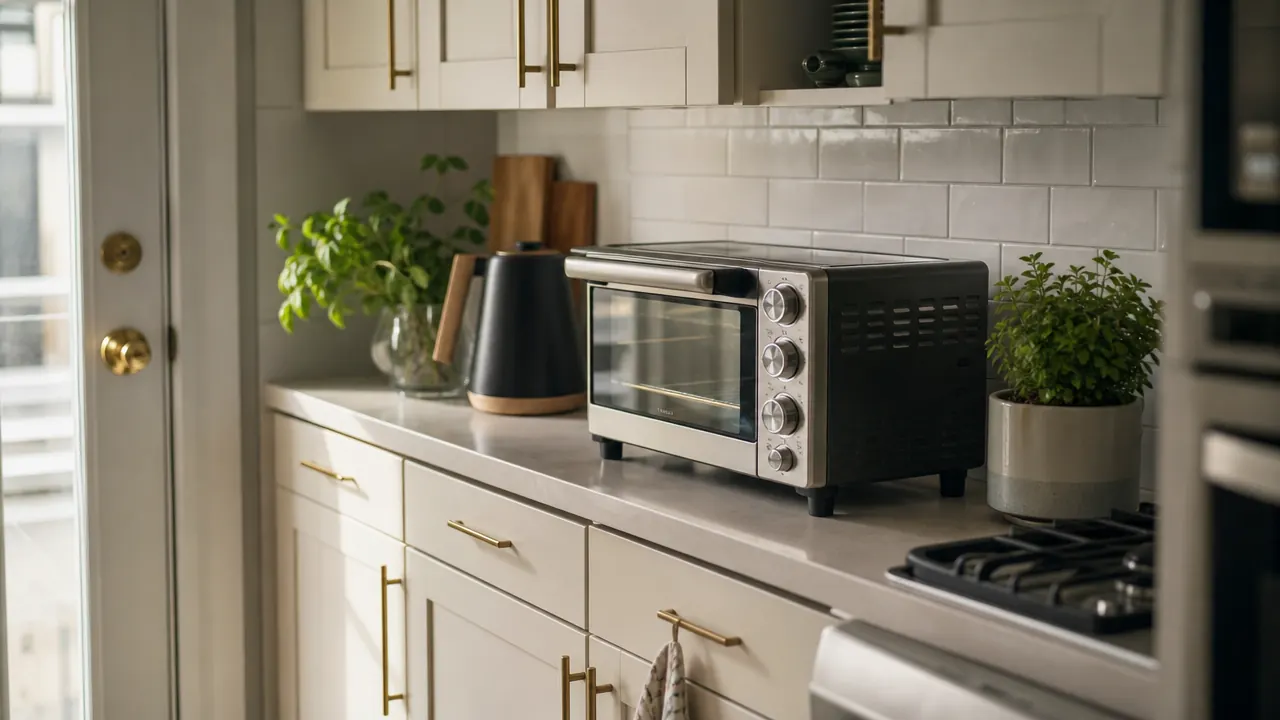
The BLACK+DECKER TO1760SS is a strong fit for anyone cooking for one or two people in a kitchen where counter space is genuinely limited. If you mostly need to make toast in the morning, reheat leftovers at lunch, and roast a small portion of food for dinner, this oven covers all of that without demanding much space or requiring a learning curve beyond the temperature adjustment I described above. It is also a solid choice if your full-size oven is unreliable or if you simply want to avoid heating the whole apartment in summer. I run the TO1760SS instead of my full-size oven probably eighty percent of the time now, even when I have the option.
If you are interested in how it stacks up against the Breville Mini Smart Oven, which costs significantly more, I have a full comparison piece at BLACK+DECKER TO1760SS vs Breville BOV450XL that breaks down where the price difference does and does not translate to better results. Short version: for most small-kitchen cooks, it does not.
Who Should Skip It
If you bake frequently and precision matters to you, the hot spot and temperature variance will require ongoing attention that may become frustrating. A baker who is doing delicate layer cakes or French macarons in a toaster oven would be better served by something with digital temperature control and a powered convection fan. The TO1760SS is also not the right pick if you want to cook for four people regularly. The 4-slice capacity is genuinely four slices of bread, or a small quarter-sheet pan. A 6-slice or larger oven would be a better fit for bigger portions. And if you are someone who has ten inches of counter or less to work with, check the physical dimensions before ordering. At nearly sixteen inches wide, it needs its own dedicated footprint.
If you are weighing whether a toaster oven can actually replace your full-size oven for most meals, I wrote a piece on exactly that: 10 Reasons a 4-Slice Toaster Oven Can Replace a Full-Size Oven in a Small Kitchen. It walks through the specific cooking tasks where the swap works well and the ones where you will miss the larger space.
Fourteen months in, I would buy the TO1760SS again without hesitating.
It handles daily toast, roasting, baking, and reheating in a small footprint, and it has not given me a single mechanical problem in over a year. If you are on the fence, the current price on Amazon is the place to start.
Amazon Check Today's Price on Amazon →