
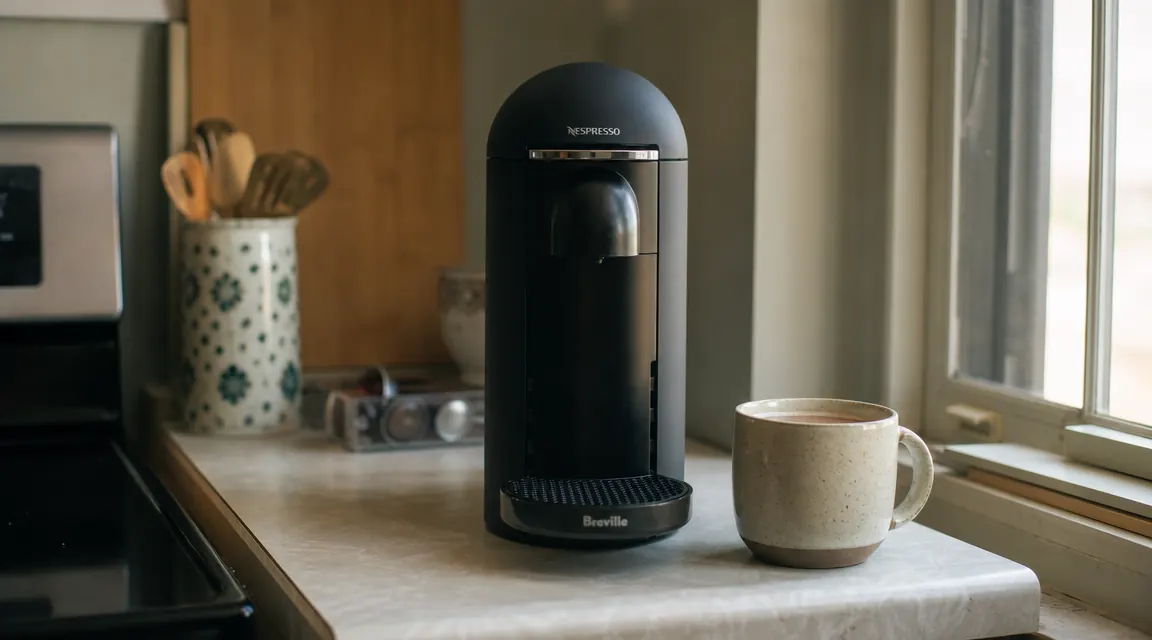
I have been using the Keurig K-Mini for the better part of a year in a kitchen where I have roughly the counter space of a standard door, minus the doorknob. Before I bought it I read probably a dozen reviews. None of them told me the things that actually changed how I used the machine once I had it in front of me. That is what this review is. Not a rundown of specs you can read on the Amazon listing. The five things that surprised me, why they matter, and what to do about each one.
To be clear: I like this machine. It makes a decent cup of coffee in a footprint that fits my kitchen. But liking something and pretending it has no rough edges are two different things, and if you are about to spend real money on a coffee maker, you deserve the rough edges too.
The Quick Verdict
Earns its spot on a narrow counter for solo coffee drinkers, but only once you know the five quirks that the product page will not tell you upfront.
Amazon Check Today's Price →You deserve to know what you are getting into before the box arrives.
The K-Mini has over 107,000 Amazon reviews for a reason. It is genuinely reliable and genuinely small. Read the surprises below, then check today's price if it still sounds right for your kitchen.
Amazon Check Today's Price on Amazon →Surprise One: The Reservoir Is Not Really a Reservoir
Every larger Keurig model has a tank that sits to the side or back of the machine. You fill it with eight or twelve cups of water, tuck it back in, and then the machine draws from that supply one cup at a time for days. The K-Mini does not work that way. There is a removable tank, but it holds exactly enough water for one brew. When you want another cup, you fill it again. Every single time.
Keurig calls this a feature. They market it as freshness, because the water does not sit in a tank for three days. That is not wrong. But it also means that making two cups of coffee back-to-back is a two-fill-and-two-wait process, and if you are half-asleep at 6:15 in the morning, that second fill is easy to forget. I have pushed the brew button with an empty tank more than once and stood there confused about why nothing was happening. The machine does not alert you loudly when it is empty. It just does not brew. You figure it out fast, but it will catch you the first several times.
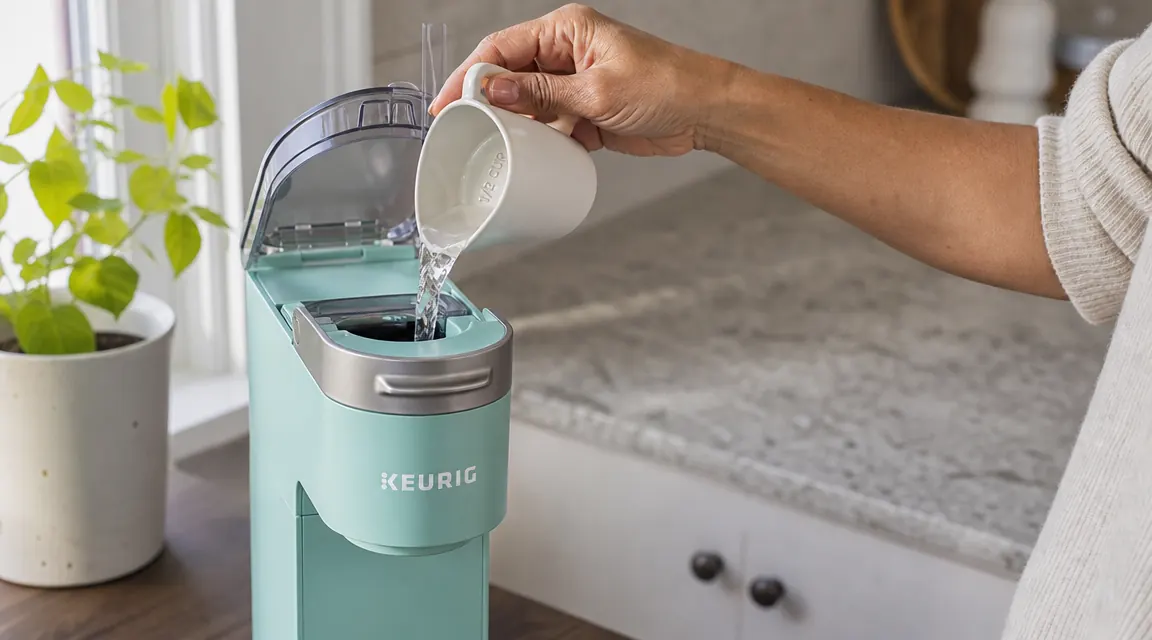
There is one workaround that helps a little: instead of using the removable tank, you can pour water directly into the top of the machine from a small measuring cup or travel mug. The opening accepts any pour. Some people keep a water carafe on the counter nearby and just pour before each brew without bothering to fill the tank. After several months I switched to this habit because my kitchen does not have great reach-around access to the tank on the back, and it turned out to be faster anyway.
Surprise Two: Smaller Volume Means Stronger Coffee
The K-Mini has a brew-size dial that goes from 6 ounces up to 12. The listing presents this as a flexibility feature. It is, but most people use it backwards. They pick 10 or 12 ounces because they want a big mug, and then they complain the coffee is weak. The machine is brewing the same amount of grounds from the same K-Cup pod regardless of volume. When you dial up to 12 ounces, you are pulling more hot water through those same grounds, which dilutes the extraction. The result is a pale, mild cup that tastes like it is missing something.
Dial down instead. At 6 ounces with a dark or medium roast pod, the K-Mini produces a genuinely strong cup. Not espresso, but concentrated enough to satisfy most coffee drinkers who have given up on pod machines for being bland. If you want more volume, pour the 6-ounce brew over ice, or add hot water to the mug after brewing to bring it to the size you want. Either approach gives you control over both volume and strength. The 10- and 12-ounce settings have their place, primarily for people who are going to add a lot of creamer, but they are not where the machine shines.
My daily setting is 8 ounces with a medium-dark roast pod and that hits the balance I want. If I am using a lighter roast, I drop to 6. If you read other reviews and feel like the K-Mini makes weak coffee, try going down one or two notches on the dial before you decide the machine is the problem. It almost never is.

Surprise Three: Descaling Is a Real Maintenance Commitment
Keurig says to descale every three to six months. With city tap water, my experience is closer to every 10 to 12 weeks. I noticed two signals: a faintly metallic taste showing up in the cup, and a slower-than-usual brew where the coffee drips out more sluggishly than it used to. Both mean mineral scale has built up in the internal lines, and both go away after a descaling cycle.
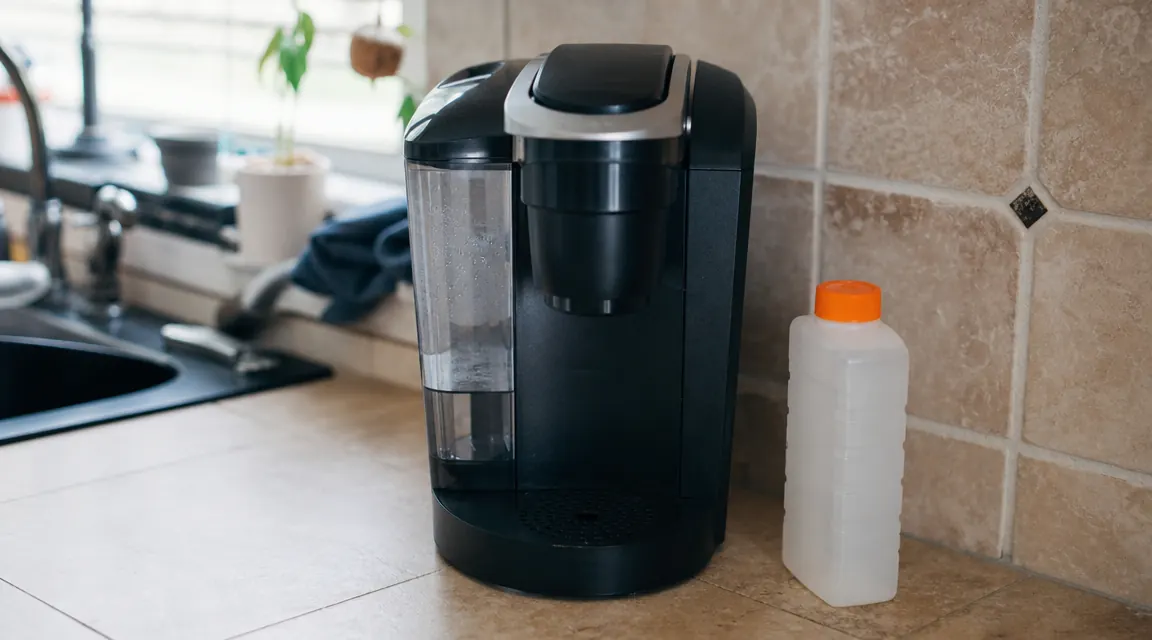
The process itself is not complicated, but it takes time. You fill the tank with Keurig's descaling solution diluted with water, run several rinse cycles, then run several plain-water cycles to flush it out. Start to finish it takes around 40 to 50 minutes, mostly waiting. I usually do it on a weekend morning when I have other things happening in the kitchen. You cannot use the machine for coffee during the process, so if you depend on that first cup before you are functional, do the descaling after you have already had your coffee from somewhere else.
Set a phone reminder when you first set the machine up. Mark it for 10 weeks out. You will probably ignore it once and do it at week 12, which is fine, but having the reminder is better than having it sneak up on you with a bad-tasting cup and no idea why. Keurig descaling solution is about eight dollars on Amazon and one bottle handles two to three descaling sessions for a K-Mini. It is not a big expense, just a regular one.
The machine did not tell me it needed descaling. It just started making worse coffee until I figured it out. Put a reminder on your phone the day you set it up. You will thank yourself in 10 weeks.
Surprise Four: The Startup Noise
The K-Mini is quiet at rest and quiet while heating the water. Then the pump engages, and for about four to six seconds at the start of the actual brew, it makes a sharp, somewhat mechanical chugging noise. Not a screech, not a grind, but louder than the average drip coffee maker running. If you share a wall with a neighbor or share a sleeping space with someone who wakes up easily, that pump noise at 6 a.m. is worth factoring in.
I do not find it bothersome at all now that I know to expect it. But the first morning I used it I was not prepared and the noise startled me. By the second week it had become ambient, the same way you stop noticing a refrigerator hum. I mention it because a few people in the Amazon reviews describe it as loud and concerning, and I want to be accurate: it is not a malfunction, it is just the pump. It is consistent, brief, and it does not get louder over time. If you have a relatively quiet kitchen and you are a light sleeper who brews coffee in the early morning, know that about four seconds of pump noise comes with the machine.
There is nothing to do about this one. It is how single-serve pod machines work internally. I flag it only because I was surprised by it and I suspect other people are too.
Surprise Five: The Auto-Off Timing Is Very Fast
The K-Mini shuts itself off 90 seconds after a brew finishes. Not five minutes, not ten, ninety seconds. For a lot of people this is a background convenience they never think about. For me it has caught me twice when I went to top off a cup and found the machine off and cold.
Here is the practical issue: when the machine turns off, the heating element is off. If you want to brew again, you push the button, wait for it to reheat, and then brew. On cold mornings when the machine has been sitting off for a while, that preheat adds a minute or so to the total wait. The 90-second auto-off means that if you are a slow morning person who brews cup one, drinks it over 10 minutes, and then wants cup two, you will almost always be starting from a cold machine for that second cup.
There is no setting to extend the auto-off window. It is fixed. My workaround is to brew cup two immediately after cup one, while the machine is still warm, and let the second cup sit in a mug on a small warming coaster while I finish the first. That keeps both cups at a good temperature and I only have to wait once. It is not a complaint exactly, just an adjustment in how you plan your morning.
One More Thing: Cord Storage Is Genuinely Useful
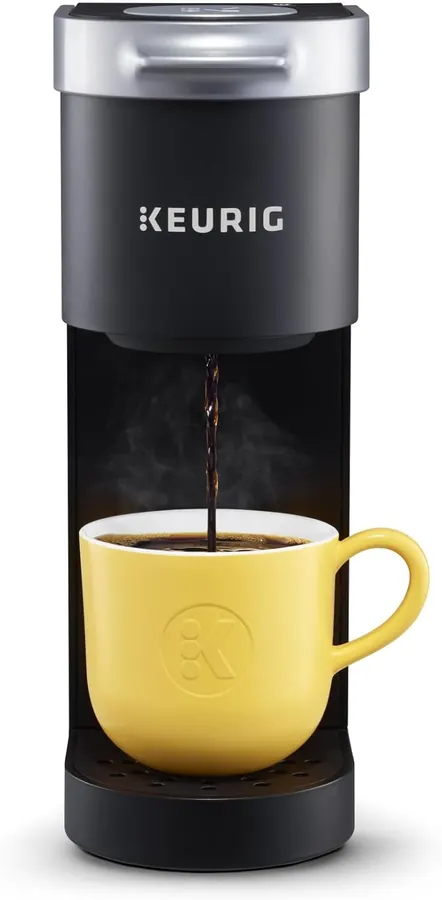
This is not a surprise so much as an underappreciated feature. The K-Mini has a channel built into the base of the machine where you can wrap the power cord. The cord is about 28 inches long, and when wrapped it sits completely under the machine footprint rather than trailing across the counter or dangling down the cabinet face.
In a small kitchen where counters are crowded and outlets are in inconvenient places, this matters more than it sounds. I have other appliances with cords that flop around, catch on things, and generally make the counter look messier than it is. The K-Mini's cord is contained. It is a small engineering decision that signals the designers were at least aware that some people use this machine in tight quarters.
What I Liked
- Genuinely five inches wide, the smallest footprint in the K-series line at this price
- Brew-size dial from 6 to 12 ounces lets you tune strength once you understand that smaller means stronger
- Cord storage channel on the base keeps the power cord off the counter completely
- Compatible with any standard K-Cup pod and any off-brand reusable filter
- Auto-off after 90 seconds reduces the mental load of remembering to turn it off
- Drip tray and reservoir both remove and rinse clean in under a minute
Where It Falls Short
- Fill-per-cup reservoir requires refilling before every single brew, not just every few days
- Pump noise at brew start is brief but louder than most drip coffee makers, a real consideration for early-morning brewers
- Descaling needed every 10 to 12 weeks with city tap water, not every 6 months as the documentation implies
- No way to change the 90-second auto-off window
- 12-ounce brew produces noticeably weak coffee; 8 ounces or less is the practical sweet spot
Who This Is For
This is the right machine for one-cup households in small kitchens who want a reliable, low-maintenance brew without spending much time or counter space on it. The fill-per-cup design is genuinely not a problem when you are filling it for yourself once in the morning. The limited footprint means it coexists with everything else on a narrow counter. And once you understand the strength dial, the coffee quality is much better than K-Mini's reputation among pod-machine skeptics would suggest.
It is also a solid entry point for someone who has never owned a single-serve brewer and wants to try the format without committing to a more expensive machine with a larger reservoir. If you decide the fill-per-cup routine bothers you after a few months, you have learned that about yourself at a lower cost than buying a premium Keurig upfront. My full comparison of the K-Mini against the Hamilton Beach single-serve is at Keurig K-Mini vs Hamilton Beach if you want to see how it stacks up on price and footprint against its closest competitor.
Who Should Skip It
If you want to make two or three cups fast, back-to-back, for yourself and another person, the fill-per-cup design will frustrate you quickly. There is no way around the per-cup fill requirement. A machine with a 40- or 46-ounce removable reservoir handles multi-cup mornings without making you think about water every single time.
Also skip it if noise matters a great deal in your household. The pump noise at brew start is brief and not alarming, but it is real. Apartment walls are thin, partners sleep in, and some kitchens are right next to a bedroom. If you are already being careful about quiet in the early morning, there are pod machines that run more softly. The K-Mini is not the loudest machine on the market by any stretch, but it is not library-quiet during that initial pump cycle.
Now you know what the listing does not tell you. If it still sounds like the right fit, the price is worth checking today.
The Keurig K-Mini has earned its place on counters all over the country because it does what it promises: one good cup in a five-inch footprint. Check current pricing on Amazon before it changes.
Amazon Check Today's Price on Amazon →