
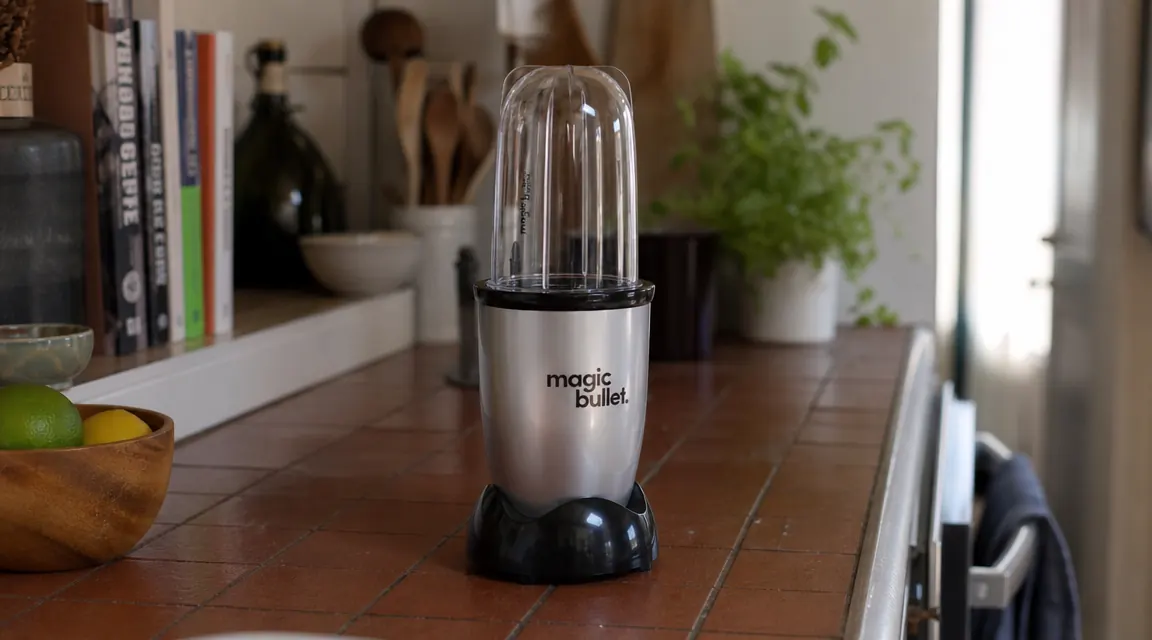
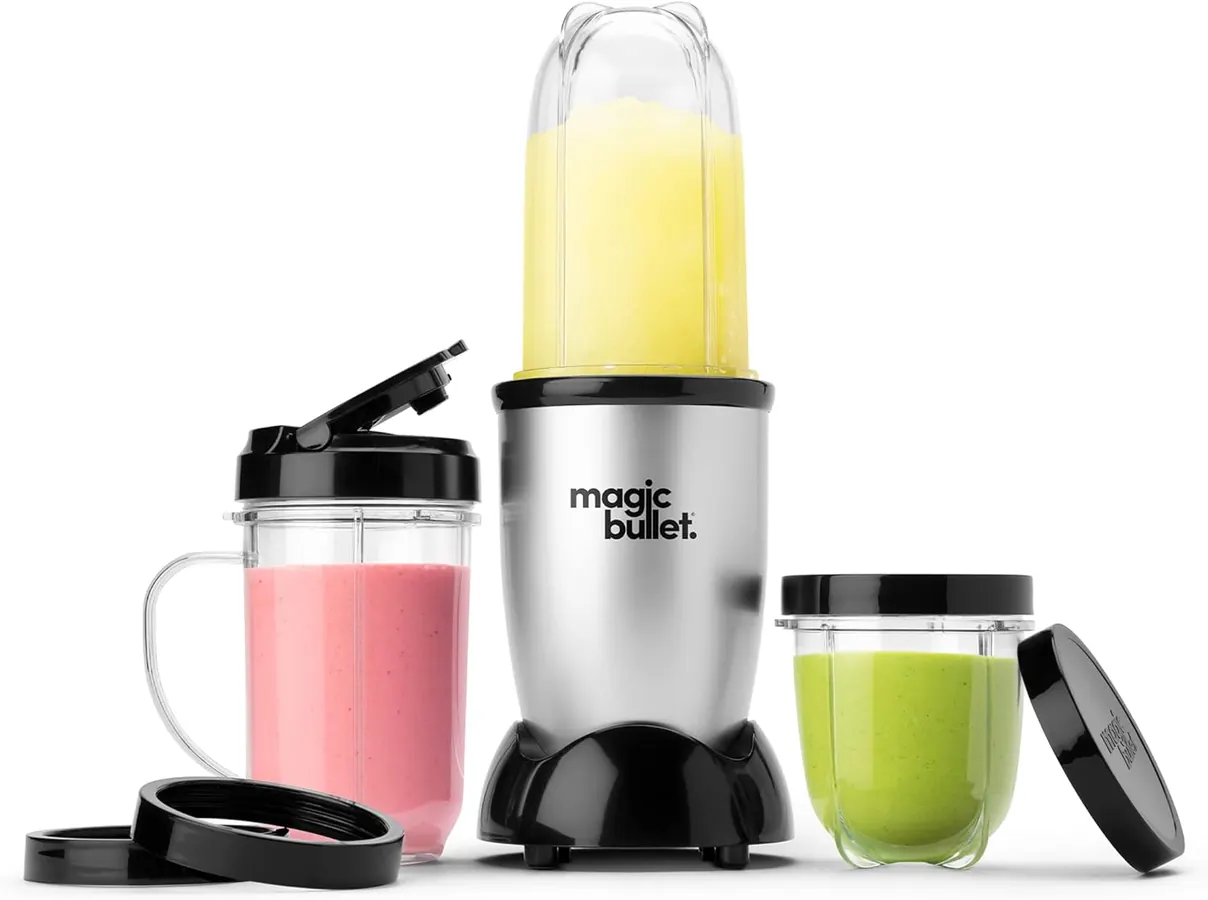
About a year ago I cleared out the cabinet under my kitchen counter and took stock of what was actually earning its spot. My full-size blender, a big countertop thing with a pitcher the size of a bucket, was taking up nine inches of prime counter real estate and getting used twice a month. I needed something that blended a single serving of smoothie in the morning, chopped onions when I was too lazy to drag out the knife, and then disappeared. A friend suggested the Magic Bullet 11-Piece Set. I was skeptical because I had heard that name since approximately 2003, but I bought it anyway. That was twelve months ago, and here is what I actually found.
My kitchen is the galley style you find in a lot of older apartment buildings. It runs about seven feet end to end, and the useful counter space, the stretch between the sink and the stovetop, is maybe four feet. I treat every inch of that counter like Manhattan real estate. What goes there has to justify itself weekly, not just on holidays. The Magic Bullet now lives in a corner that used to hold a bread box I was keeping more out of habit than necessity. That swap tells you something.
The Quick Verdict
A capable everyday blender for single-serving smoothies and small-batch sauces that earns its four-inch footprint, but struggles with dense frozen fruit blends and needs a seal check every few months.
Amazon Check Today's Price →If your mornings are slower than they should be because of a blender that does too much for one person, the Magic Bullet fixes that problem.
It takes up four inches of counter, rinses in thirty seconds, and handles everything from a breakfast smoothie to a quick vinaigrette. Check the current price on Amazon before the next size you buy turns out to be another nine-inch commitment.
Amazon Check Today's Price on Amazon →How I Have Used It Over the Past Twelve Months
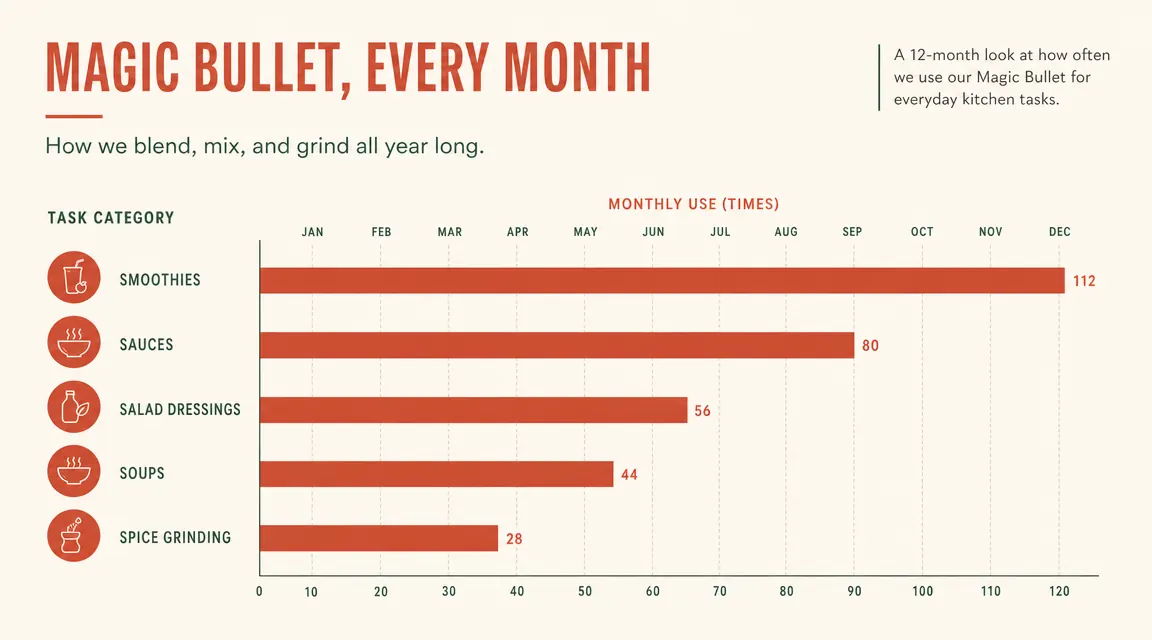
My primary use case every single morning is a smoothie. I am 54, I live alone, and I do not want to make 48 ounces of anything at 6:45 in the morning. The Magic Bullet's tall cup holds about 18 ounces, which is just right for a cup of frozen mango, a handful of spinach, half a banana, and whatever liquid I feel like that day. I twist the blade assembly onto the cup, flip it over onto the motor base, and in about 25 to 30 seconds I have a smooth drink. Then I rinse the cup under the tap, leave it on the drying rack, and get on with my morning. The whole operation takes less time than my coffee brews.
Beyond smoothies, I have used the Magic Bullet for: homemade salad dressings, small-batch pesto, blending a single can of tomatoes for pasta sauce, grinding a tablespoon of spices when I do not want to get the mortar out, and once, memorably, pureeing two portions of butternut squash soup for dinner. It has also seen duty as a quick chopper for onions and garlic when I need a rough chop and do not feel like setting up the cutting board and knife. The milling blade that comes with the 11-piece set handles coffee beans and dry spices reasonably well, though I do not grind coffee with it regularly because the grind size is uneven compared to a dedicated burr grinder.
Motor and Durability After a Year of Daily Use
The Magic Bullet runs a 250-watt motor. That sounds modest because it is modest. It is not going to pulverize a full cup of ice cubes or turn a frozen banana that went straight from the freezer into a silky drink without protest. What it does handle well is fruit that has had ten minutes to thaw slightly, soft greens, yogurt, nut butters, and milk or juice as a liquid base. When I respect those limits, it runs clean and quiet. When I overfill the cup or pack it with rock-hard frozen chunks, it strains and occasionally stalls.
After twelve months of daily use, the motor still sounds the same as it did on day one. No grinding, no burning smell, no drop-off in performance that I can detect. I have never run it for longer than about 45 seconds continuously, which is the usage pattern it was designed for. This is not a machine you blend for three minutes straight. Short bursts, stop, check, blend again. If that matches how you cook, the motor holds up fine.
The cups and lids from the 11-piece set have held up well with one exception. The rubber seal on the blade assembly started showing a small crack around month eight. It has not caused a catastrophic leak, but I noticed condensation around the rim after blending, which it did not do earlier. I bought a replacement seal gasket for about three dollars, swapped it out, and the problem went away. I would call this normal wear for a blender used daily. Keep a spare on hand.
The Jobs It Does Better Than Expected
Salad dressings are where the Magic Bullet genuinely surprised me. I make a lot of vinaigrettes and creamy dressings from scratch because the bottled versions are mostly sweetened corn syrup with a label on them. A small-batch dressing takes about four ingredients and needs thirty seconds of emulsification. The Magic Bullet is perfect for this. I add the ingredients to the short cup, blend for twenty seconds, and the dressing is done. The short cup holds about ten ounces, which is roughly the right quantity for a week of lunches. And because the lid threads back on the same cup, I store the dressing right in the blending cup in the refrigerator. One less thing to wash.
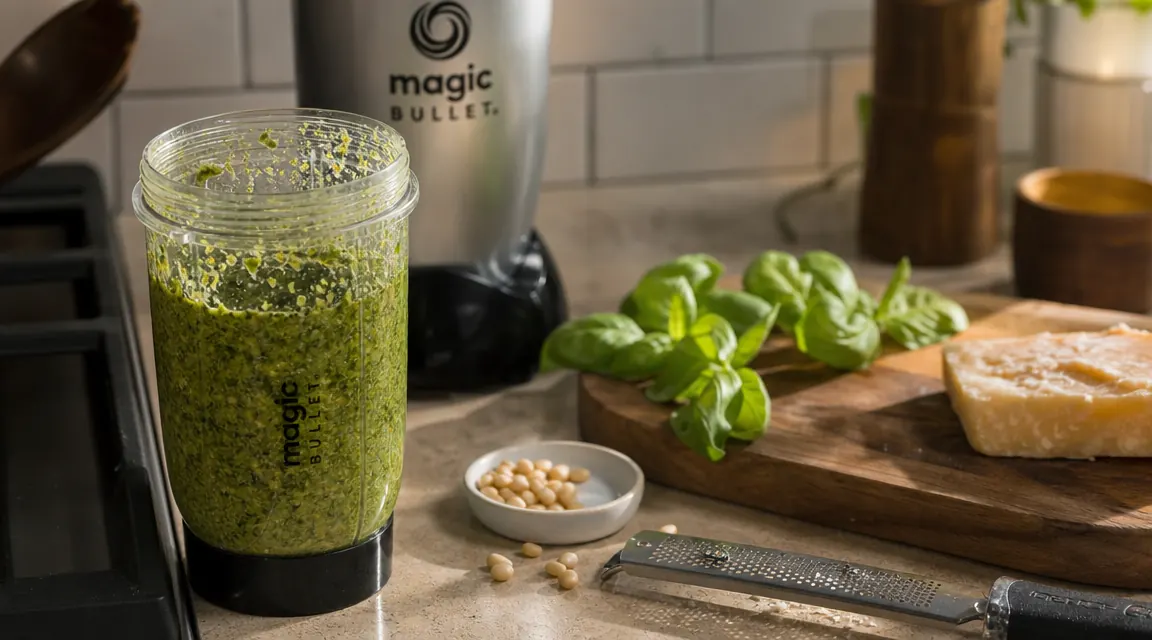
Small-batch pesto is another strong suit. A traditional full-batch pesto in a big blender requires so much basil that it ends up being more pesto than I can use before it oxidizes and turns brown. With the Magic Bullet I make a two-serving portion: a small bunch of basil, a handful of pine nuts, two garlic cloves, some Parmesan, and olive oil. Twenty seconds and it is done. It does not get quite as smooth as the food processor version, but for tossing with pasta on a Tuesday night it is more than adequate.
I make a two-serving portion of pesto in about two minutes, start to cleanup. With a full-size blender that would be a production. With the Magic Bullet it is just Tuesday dinner.
Where It Falls Short and What You Need to Know Before You Buy
Dense frozen fruit blends are the Magic Bullet's honest weak spot. If your smoothie routine relies on a full cup of frozen strawberries or a large frozen banana straight from the freezer, you will need to either let the fruit sit at room temperature for ten minutes first or add substantially more liquid than you might prefer. I have gotten into the habit of pulling my frozen fruit out of the freezer while my coffee brews, which takes the edge off the hardness and lets the bullet blend without straining. It is a small adjustment, but it is an adjustment.
The tall cup and the motor base are a slightly awkward shape to store. The motor base is a cylinder, which means it tends to tip if you jostle the shelf. I keep mine on a small silicone mat in the corner, which gives it just enough grip to stay upright. The cups stack inside each other and the whole set fits in a space about four inches wide by about ten inches tall, which is very manageable. Just plan for the motor base needing a stable, flat home.
The noise level is moderate, not loud. It is not something I would run at 6am in a thin-walled apartment building if I had roommates sleeping nearby, but in a solo apartment or a house it is no louder than a drip coffee maker running. It is definitely quieter than my old full-size blender.
The 11-Piece Set: What Is Useful and What Collects Dust
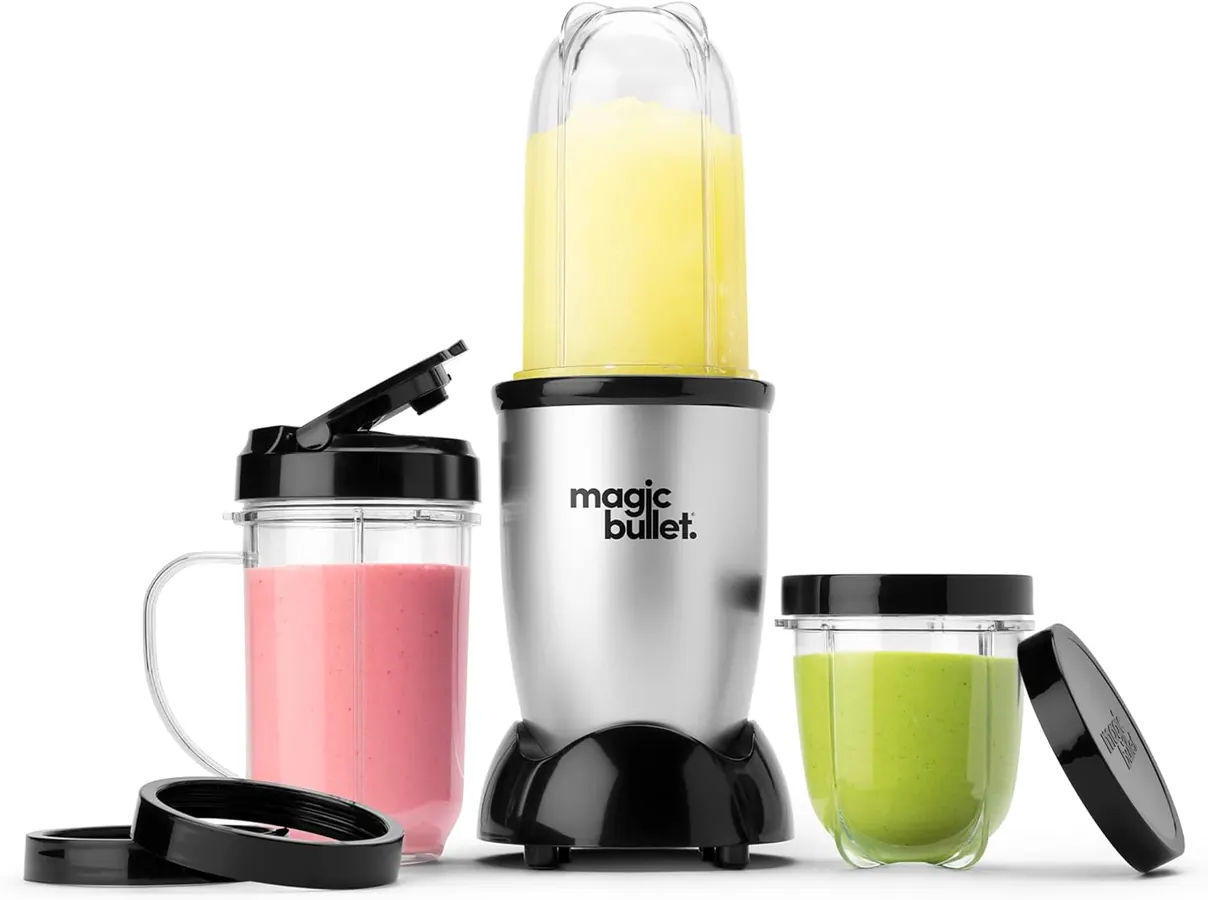
The 11-piece set includes: the motor base, two tall cups, one short cup, one party mug (which is oversized), the cross blade, the flat blade for dry grinding, two stay-fresh resealable lids, two comfort lip rings for drinking straight from the cup, and a recipe guide. My most-used items are the tall cups, the cross blade, and the stay-fresh lids. I use the short cup for dressings and small sauces. I use the milling blade for spices occasionally.
The party mug is larger than the other cups and I honestly almost never use it. It is too big for a single serving and too small for two people to share. The comfort lip rings are nice for smoothies on the go, though I mostly drink mine standing over the sink, so they stay in the drawer. The recipe guide sent me to a website that no longer loads, which is the most 2006 thing about the entire product experience. None of this changes how useful the core setup is, but if you are buying this solely for the extra pieces, manage your expectations accordingly.
What I Liked
- Takes up four inches of counter, easily stored in a cabinet when not in use
- Rinses clean in thirty seconds for most jobs
- Blends directly in the serving cup, which cuts down on dishes
- Short-cup format is ideal for single-serving sauces, dressings, and dips
- Quiet enough for early mornings in an apartment
- Replacement parts are widely available and inexpensive
- Motor has held up through a full year of daily use without any performance drop
Where It Falls Short
- Struggles with fully frozen fruit straight from the freezer without added liquid
- 250-watt motor is not enough for ice crushing or very thick nut butters
- Blade seal needs inspection every few months and eventual replacement
- Motor base is cylindrical and tips easily without a grippy surface under it
- The included recipe guide website is defunct
- Not suitable for large batches of anything
Who This Is For
The Magic Bullet is the right blender for people who cook or blend in single-serving portions and who care deeply about not giving up counter space or cabinet space to a machine that mostly goes unused. If your household is one or two people, you make smoothies or shakes a few times a week, you enjoy making small-batch sauces and dressings from scratch, and you do not need to crush ice or make large batches of anything, this machine will cover your blending needs without complaint for at least a year, probably longer. It is also a very sensible choice for a second blender in a larger kitchen where counter space has already been claimed by bigger appliances.
Who Should Skip It
Skip the Magic Bullet if you make frozen smoothie bowls with a base of mostly hard-frozen ingredients and minimal liquid. You will fight the machine every morning and that friction will eventually make you stop using it. Also skip it if you regularly blend for three or more people at once or if you want to make soups, hummus, or nut butters in any meaningful quantity. For those uses, look at a higher-wattage personal blender like the NutriBullet Pro, which I cover in my head-to-head comparison over at the Magic Bullet vs NutriBullet page. The NutriBullet runs a 900-watt motor and handles tougher blends with less complaint, though it costs more and takes up a bit more space. There are also good reasons a personal blender of any kind is worth considering for an apartment kitchen if you are still on the fence, and I outline ten of them in my piece on why a personal blender belongs in a small apartment kitchen.
The Magic Bullet does not ask for counter space, cabinet space, or a PhD in blender settings. It asks for frozen fruit that has had ten minutes to soften and a reasonable expectation of what 250 watts can do.
If that sounds like your kitchen, it is worth looking at today's price on Amazon. With over 119,000 reviews at a 4.4-star average, the data on whether this thing holds up is about as robust as appliance data gets.
Amazon Check Today's Price on Amazon →